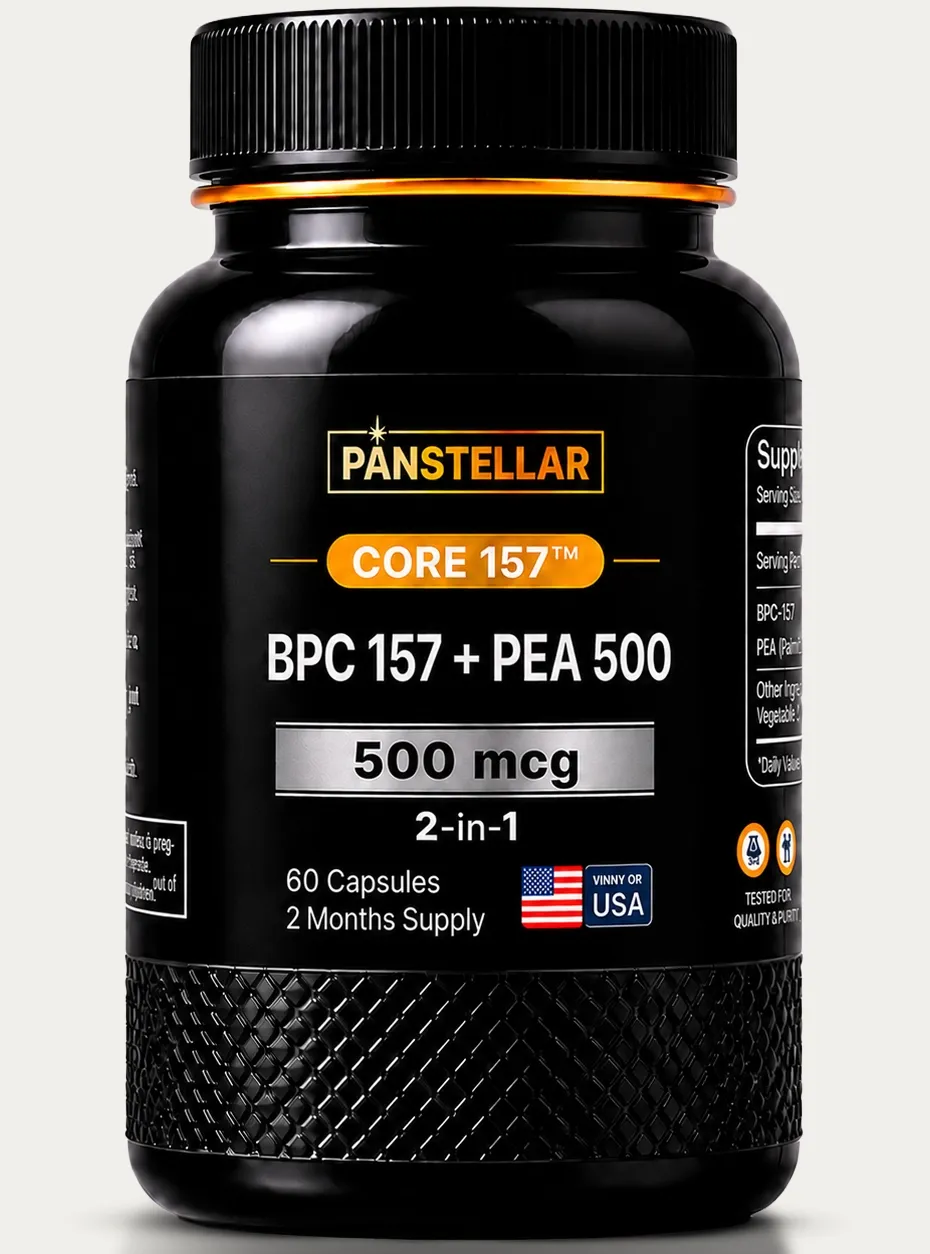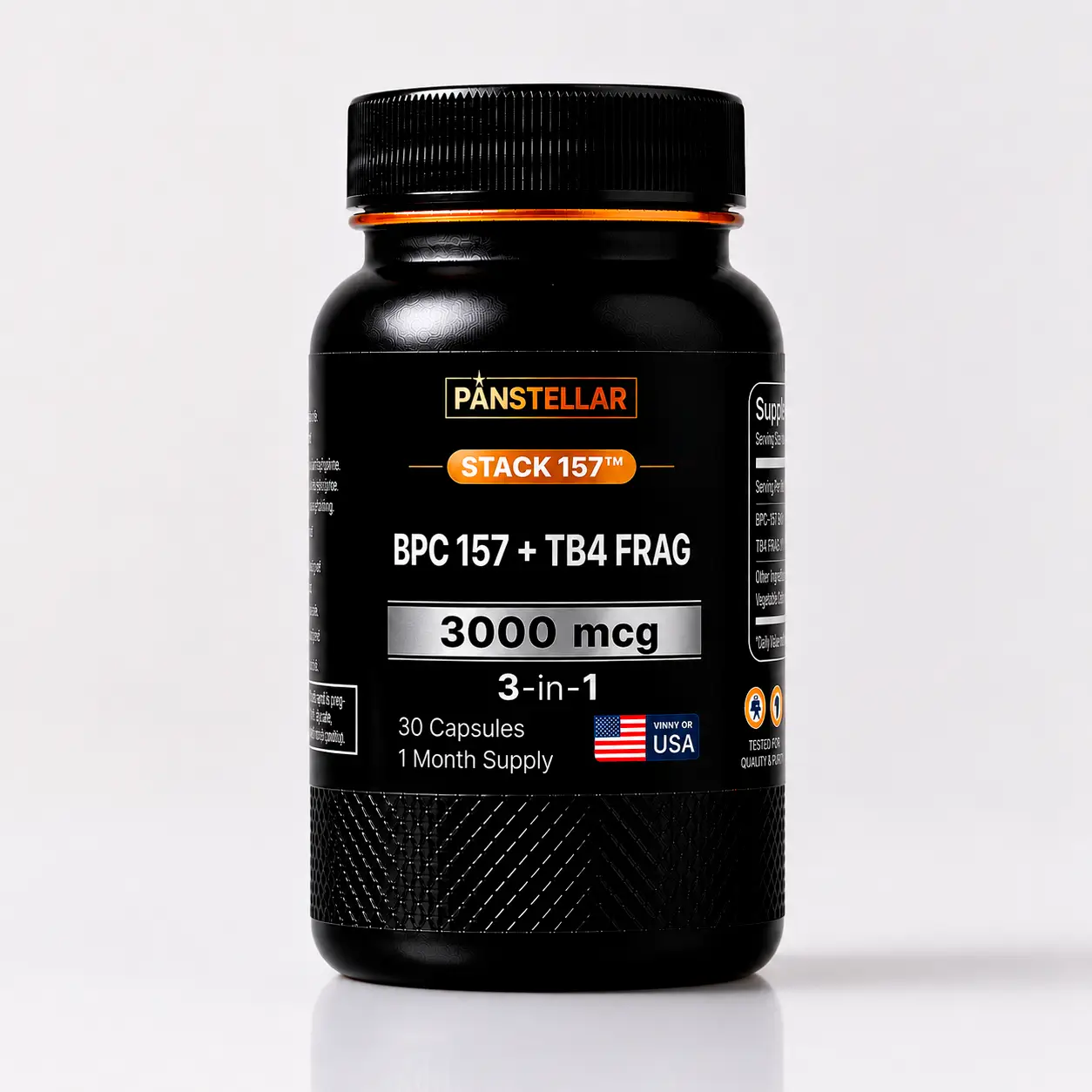

- A Certificate of Analysis (COA) is the lab report for one specific batch — not for the brand.
- Check four things: identity, purity, contaminants, and the date.
- If a COA is not batch-specific, it tells you very little.
- Email us your batch code and we send the original report for that exact batch.
Where your batch code lives
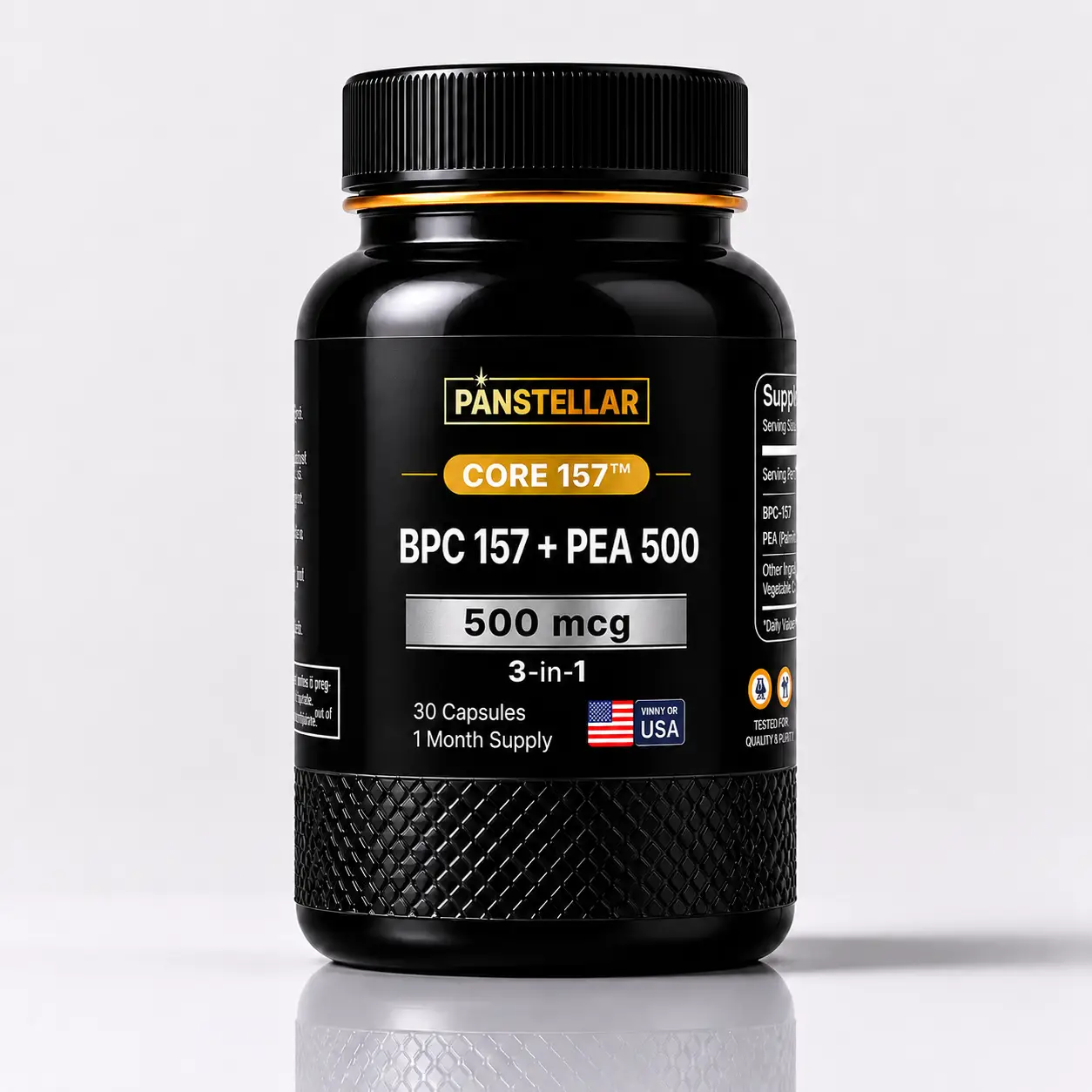
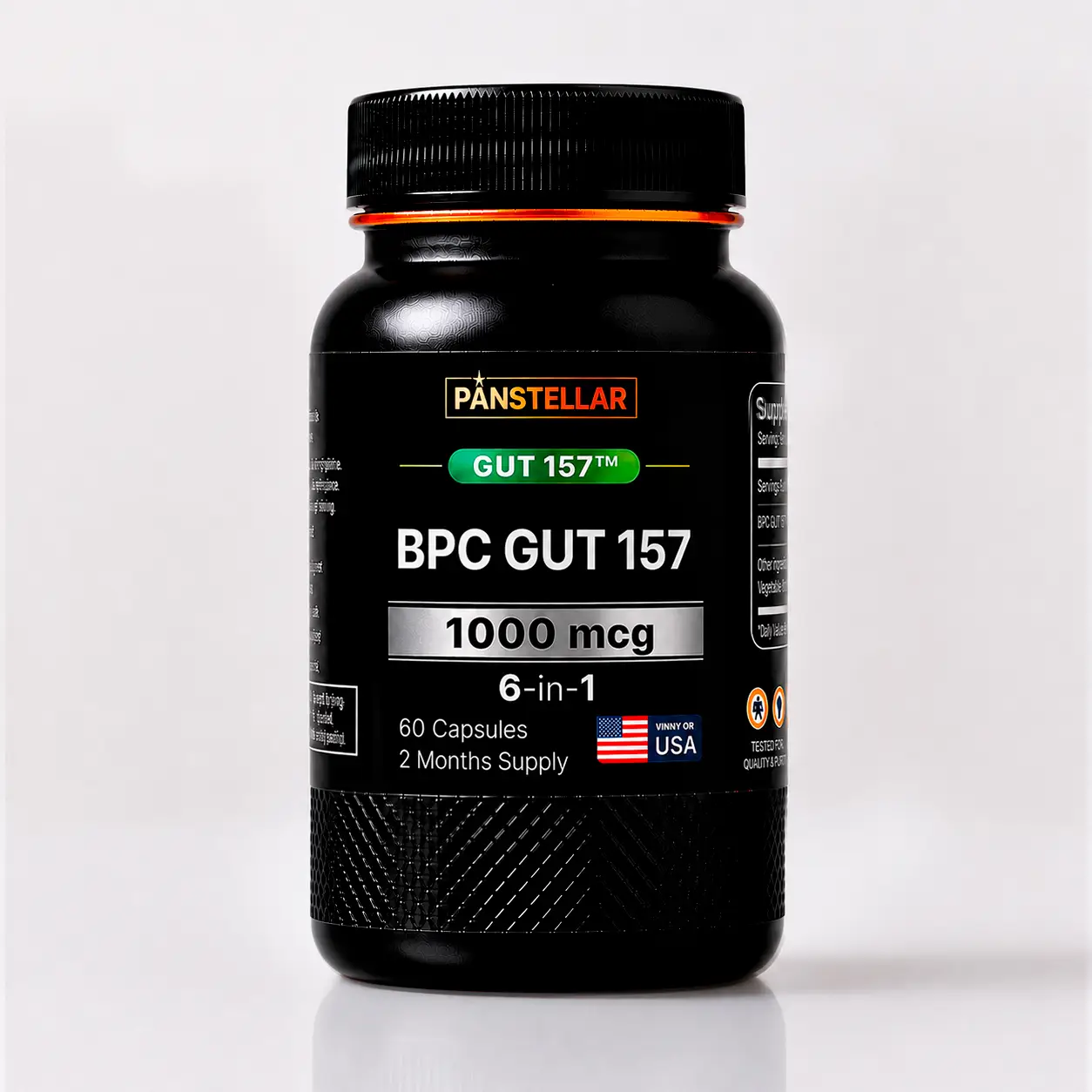
Look at the bottle. Every Panstellar bottle carries a unique batch code — ours currently reads Batch 0724. That code is the key to everything below. A brand that cannot connect the bottle in your hand to a specific report is asking you to trust a logo.
The four lines that matter
1. Identity — is it the right molecule?
Look for mass spectrometry confirmation. This answers the most basic question: is the compound in the capsule the compound on the label? An identity test is not optional, and its absence is the single biggest red flag in this category.
2. Purity — how much of it is actually there?
HPLC purity is usually reported as a percentage. Ours runs at 99%+. Anything meaningfully below that means you are paying for filler and unknowns alongside the active compound.
3. Contaminants — what should not be there
Heavy metals, glyphosate, and common allergens should each be screened and reported. “Passes specification” without numbers is weaker than a table with actual values.
4. The date — does it match your bottle?
This is the step almost everyone skips. A COA from eighteen months ago says nothing about the batch you just opened. The report date and the batch code should line up with what you were shipped.
Three red flags
- “Lab tested” with no document. The phrase costs nothing to print.
- A single COA reused across every batch. Testing is per batch or it is theatre.
- A report with the lab name or dates cropped out. There is no good reason for that.
Get yours
Find the batch code on your bottle, email it to us, and we will send the original lab report for that exact batch. No account required, no form to fill out.
Verified sourcing, one lab report per batch.